
Modern Country Swing: A Dance Culture Shaped by Community and Music
Updated: Aug 3
Where It Came From, How It Evolved, and Why Communities Like Calgary Helped Shape It

Modern Country Swing didn’t appear overnight. It’s not just a fleeting trend. What we now call Modern Country Swing (MCS) is the result of nearly a century of cultural crossover, musical evolution, and social dance adaptation. It draws from swing-era roots, Western dance traditions, bar culture, and modern techniques. This dance style has been shaped not by one person or studio, but by communities dancing in real spaces to real music.
Right now, Modern Country Swing is everywhere. But its popularity isn’t accidental. It’s earned.
What Is Modern Country Swing (MCS)?
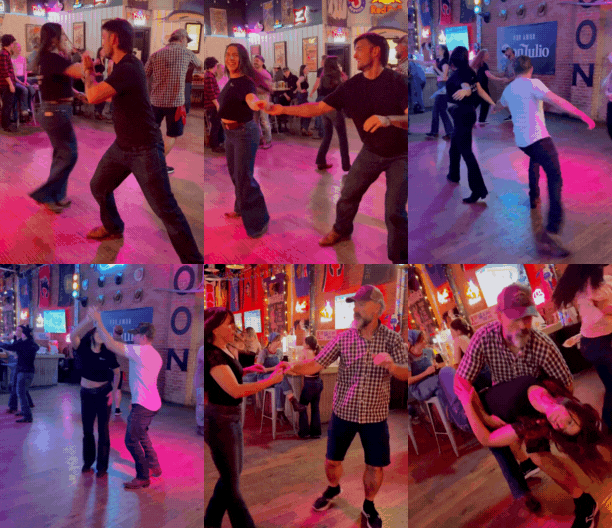
Modern Country Swing is a partner-based social dance defined by connection, rotation, and adaptability. You’ll recognize it by its spins, wraps, dips, and fluid momentum. It’s all built on lead-and-follow communication, not memorized choreography.

Designed for Real Social Environments
Crowded country bars
Dance halls and festivals
Weddings and socials
Stampede tents and live-music venues
Key Characteristics of Modern Country Swing
Partner-focused lead & follow
Improvisation over routines
Space-efficient movement (often danced in a loose “slot” or "star pattern")
Emphasis on timing, connection, and musicality
Optional dips and tricks when taught safely and progressively
Unlike progressive dances that travel around the room, Modern Country Swing thrives where people continuously dance. This adaptability is one of the biggest reasons it has grown so quickly.
Where Modern Country Swing Comes From
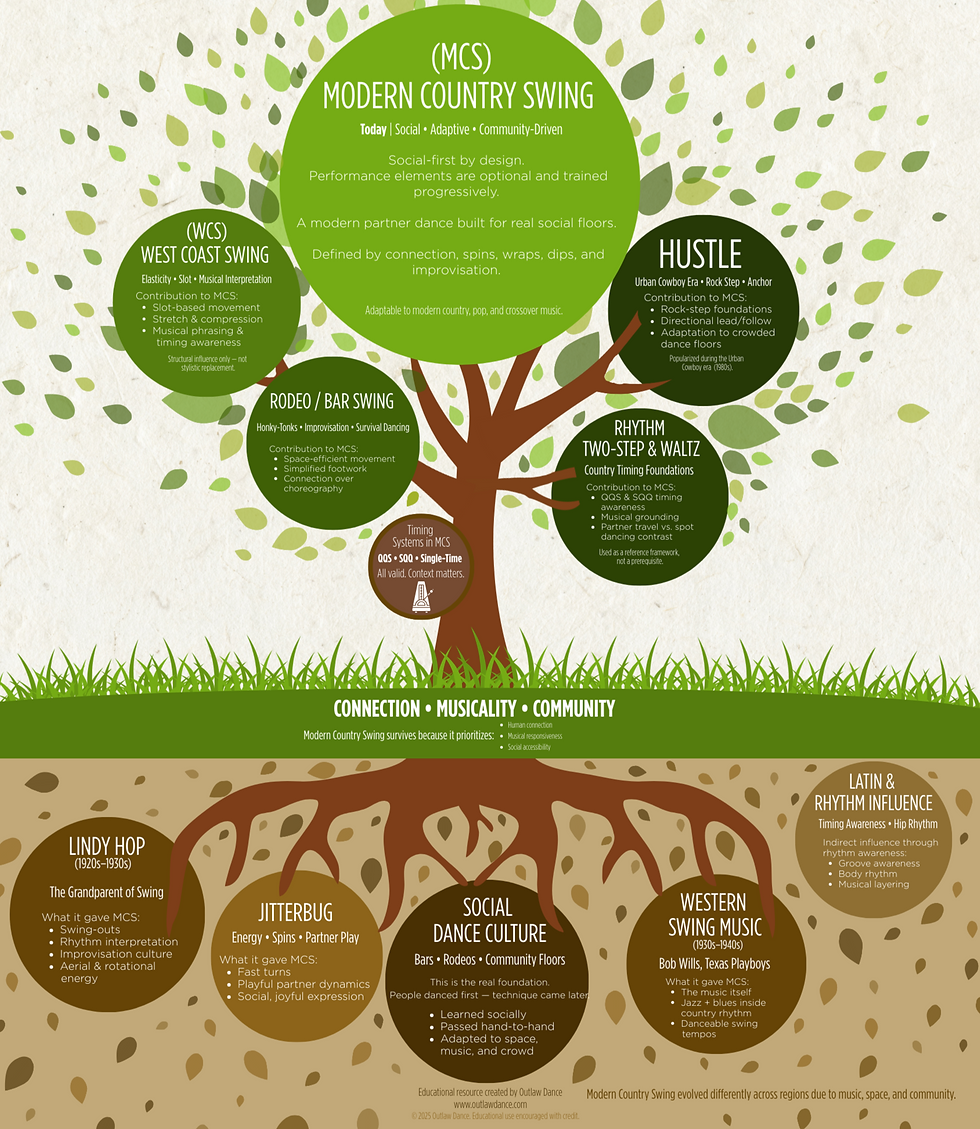
Modern Country Swing is a fusion dance, not a single-origin style. Its evolution mirrors how social dance has always evolved — organically, across decades, influenced by music, culture, and environment.
Swing Foundations (1920s–1940s)
At its core, MCS traces its roots back to Lindy Hop and Jitterbug, the original American swing dances that emerged during the jazz era. These styles introduced:
Elastic connection
Rotational momentum
Spins, wraps, and aerial concepts
Improvisation as a feature, not a flaw
Western Swing Music (1930s–1940s)
As bands like Bob Wills & His Texas Playboys fused jazz, blues, and fiddle-driven country, dancers adapted swing movement to Western music. Dance halls across Texas, Oklahoma, and the American West became laboratories for experimentation. This is where early Western Swing dancing emerged — a bridge between swing and country identity.
Rodeo Swing / Bar Swing
As dancing moved into honky-tonks, rodeo grounds, and packed bars, movement adapted:
Footwork simplified
Connection became more important than steps
Dances became compact and rotational
These informal styles — often referred to as rodeo swing, bar swing, or bar coast — are direct ancestors of today’s MCS.
The Hustle & Timing Anchors (1970s–1980s)
The Hustle (and later disco-influenced partner dances) introduced:
Rock steps/anchors
Clear pattern endings
Three- and four-count timing structures
These concepts heavily influenced how modern country swing handles timing clarity, especially in crowded venues.
Rhythm Two-Step & Waltz
Traditional Western dances contributed:
Musical grounding
“Home base” steps
Familiar country rhythm structures
This is why many Modern Country Swing systems reference QQS, SQQ, or single-time patterns — even when dancers don’t consciously label them.
West Coast Swing (1990s–Present)
West Coast Swing refined:
Slot awareness
Elastic connection
Musical phrasing and accents
Lead/follow clarity
Modern Country Swing borrowed these ideas — without becoming WCS — creating a style that feels grounded in country culture but technically refined.
Timing Systems & Stylistic Differences (Why This Matters)
One reason Modern Country Swing can look different from city to city is the timing emphasis. You’ll commonly see:
QQS (quick-quick-slow)
SQQ (slow-quick-quick)
Single-time movement
“Action on 1” vs. “Stretch on 1”
For example, educators like Red Dirt Dancing (Texas) have clearly demonstrated how different timing approaches affect:
Connection
Musical interpretation
Momentum and stretch
Trick preparation and safety
None of these approaches are “wrong.” They’re tools — and understanding them is what separates guessing from teaching.
Why Modern Country Swing Works So Well Today

Modern Country Swing thrives because it meets people where they are.
✔ You don’t need years of training to start.
✔ It looks impressive quickly.
✔ It adapts to modern country, pop, and crossover music.
✔ It encourages creativity instead of rigid rules.
✔ It builds instant social connections.
That combination makes it ideal for today’s social culture, especially in cities with strong Western roots like Calgary.
Where This Dance Lives Today
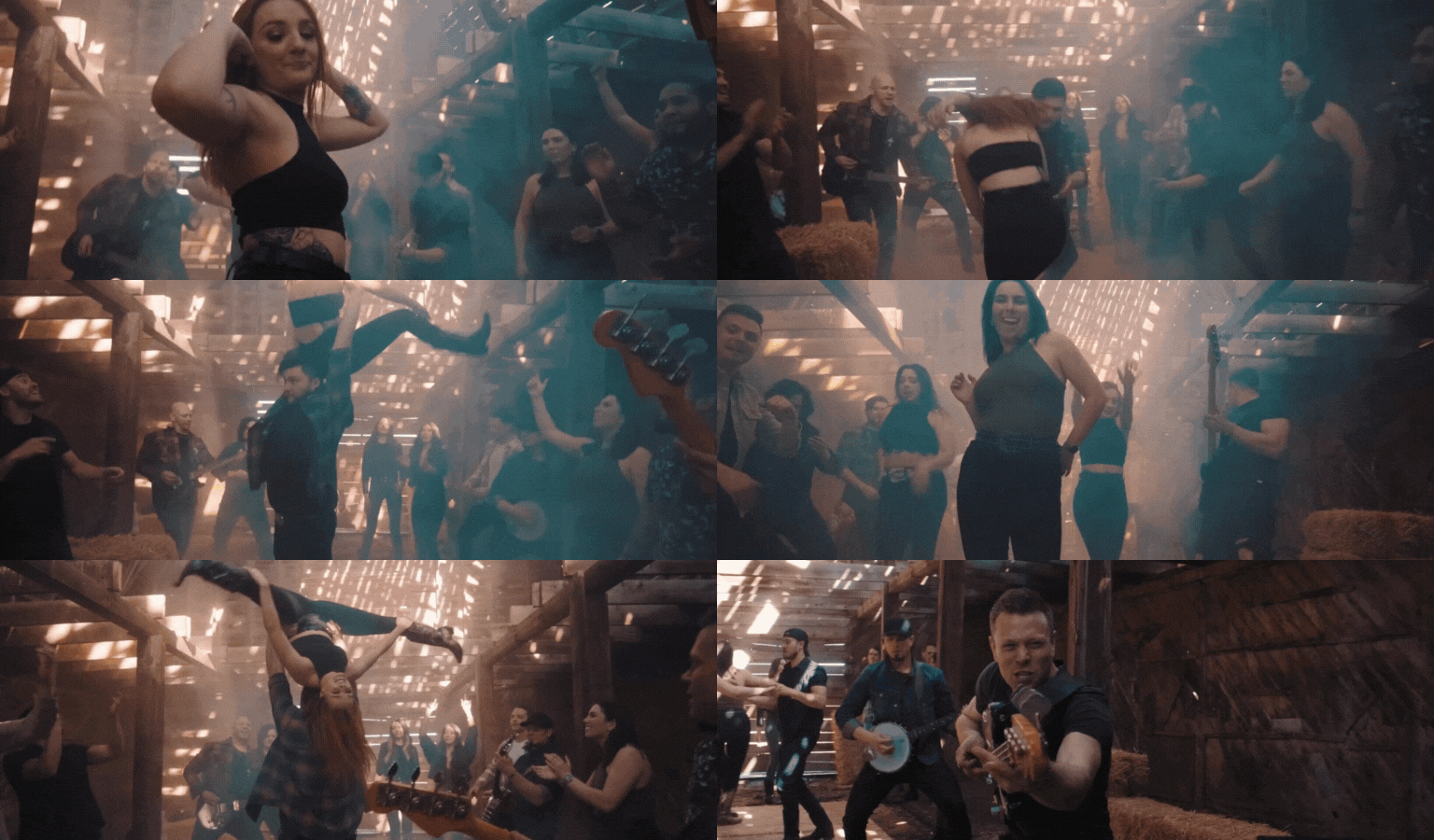
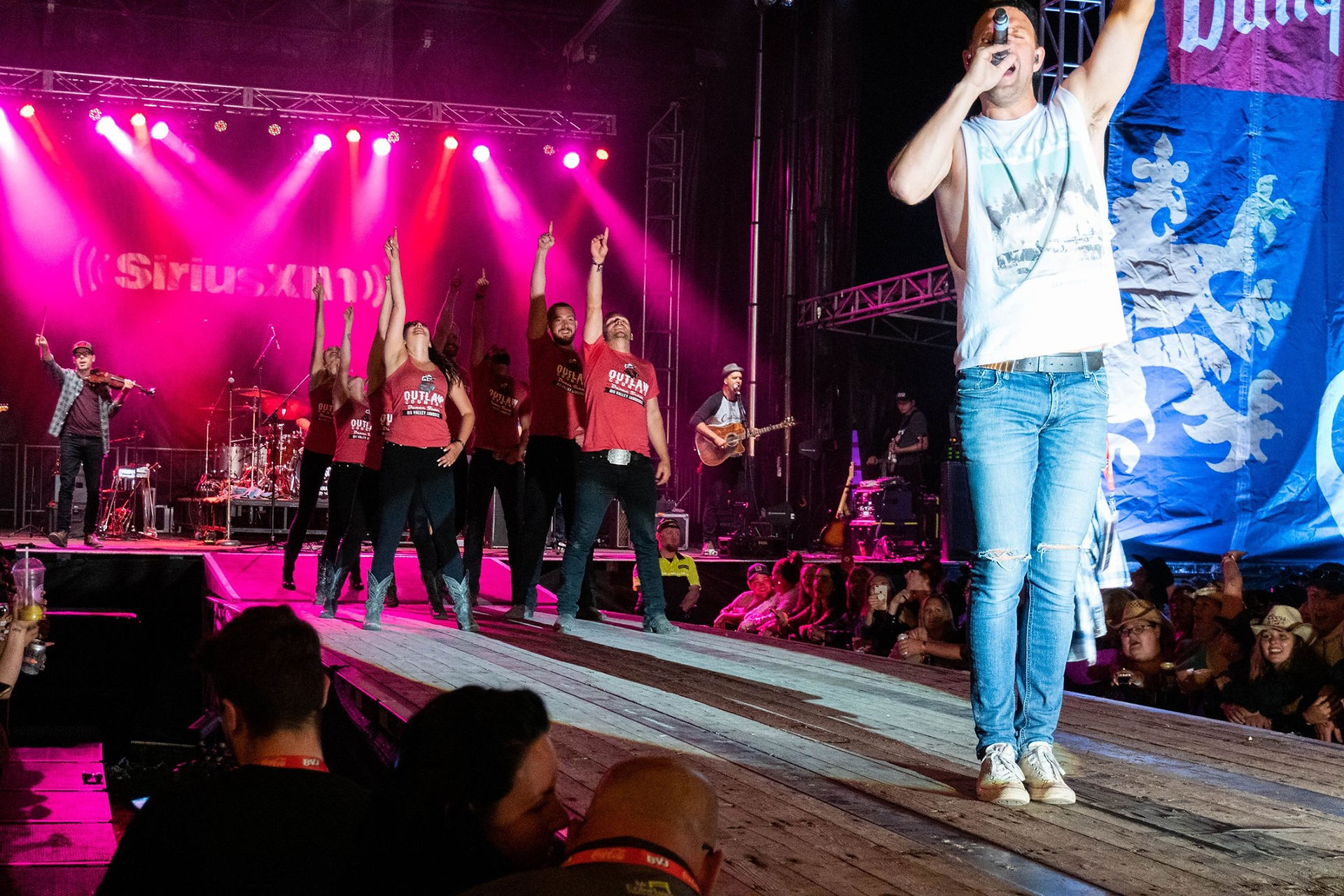
Modern Country Swing doesn’t live in one place. It shows up wherever music, movement, and community meet — on bar floors, at festivals, in street performances, and on touring stages. What connects all of it isn’t the venue — it’s the shared language of connection, timing, and trust between partners.
The Role of Social Media (And Why That’s Not a Bad Thing)

TikTok, Instagram, and YouTube didn’t create Modern Country Swing — but they accelerated its visibility.
Platforms Highlight:
Spins, dips, and wraps
Connection moments
Musical accents
Partner chemistry
Channels like Donny Robbins, Forever Country Dance, and Country Dance X helped document, teach, and spread country swing concepts long before short-form video exploded. They provided reference points, structure, and visibility for dancers across regions.
The upside? More people discovering dance.
The responsibility? Teaching it with intention, technique, and safety — not shortcuts.
How Modern Country Swing Is Often Learned — and What Tends to Work Well
Modern Country Swing shows up most visibly on social dance floors — but behind the scenes, it’s usually shaped through a mix of shared experience, exploration, and guided learning.
Across many partner dance styles, certain approaches tend to support long-term enjoyment and confidence more consistently than others. In our experience, dancers often benefit when learning environments emphasize:
Connection before complexity, allowing partners to communicate comfortably before adding layers
Timing awareness early on, so movement stays musical instead of rushed
Progressive skill-building, where new elements build naturally on existing foundations
Adaptability to real spaces, including crowded floors and varied music tempos
Safety considerations, especially when exploring dips, lifts, or momentum-based movements
These ideas aren’t unique to country swing — they’re commonly found in swing, Latin, ballroom, and contemporary partner dance training as well.
When Modern Country Swing is approached this way, it often becomes more accessible, more sustainable, and more enjoyable for a wider range of dancers. Whether someone is stepping onto a dance floor for the first time or refining skills they’ve built over years, the journey is rewarding.
If you’re curious to experience Modern Country Swing in a real social setting, beginner-friendly classes and community dance nights are a great place to start.
Common Misconceptions About Modern Country Swing
As Modern Country Swing has grown, so have misunderstandings about what it is — and what it isn’t.
Here are a few of the most common ones:
Understanding these nuances helps dancers learn with intention instead of copying without context.
Respected Leaders Helping Shape Modern Country Swing
Modern Country Swing continues to evolve thanks to experienced, community-respected dancers and educators who prioritize learning, longevity, and positive culture.
Outlaw Dance is grateful to have worked with and learned from leaders such as:
Country Nomads — Gabe Dubois & Kacee Crandall. Known for strong fundamentals, clear communication, and safe trick progressions.
Red Dirt Dancing — Chris & Sarah Ivey Recognized for athleticism, lift mechanics, and clear timing frameworks.
Kenzie Keister A West Coast Swing All-Star with deep crossover expertise in line dance and country swing.
Tara Bianco A respected line dance educator with a meaningful impact on Calgary’s dance scene.
Adia Nuno A multi-genre leader and pioneer in country dance education, events, and mentorship.
These educators represent growth through knowledge, not trends — and their work has helped shape the modern landscape responsibly.
Outlaw Dance’s Place in the Modern Country Swing Story
Founded in 2015, Outlaw Dance (Outlaw Country Ltd.) has spent nearly a decade teaching, performing, and evolving alongside Modern Country Swing — in studios, bars, festivals, corporate events, weddings, and on major Calgary stages.
Our work includes:
Teaching thousands of beginners their first dance steps
Training recreational, varsity, and professional teams
Performing at major Western events and music festivals
Collaborating with artists, venues, and educators
Prioritizing technique, safety, and community over flash
We don’t claim to “own” Modern Country Swing — no one does. But we are deeply committed to teaching it responsibly, honoring its roots while preparing dancers for where it’s going next.


Why Modern Country Swing Is Here to Stay
Because it’s alive.
It grows with music.
It evolves with dancers.
It adapts to space, culture, and community.
And most importantly — it brings people together.
That’s not a trend.
That’s a dance culture.
The Future of Modern Country Swing
As we look ahead, the future of Modern Country Swing is bright. With more dancers discovering this vibrant style, we can expect to see even more creativity and innovation.
What’s next?
New music influences will emerge, blending genres and styles.
More communities will embrace Modern Country Swing, expanding its reach.
Innovative teaching methods will continue to evolve, making it accessible to everyone.
So, whether you’re a seasoned dancer or just starting out, there’s a place for you in this exciting journey. Let’s keep dancing, connecting, and celebrating the joy of movement together!


Comments